
If you are looking to expand your renewable lighting catalog, sourcing solar garden lights wholesale requires careful evaluation of factory specs and regional compliance. Many distributors and brand owners reach out to us asking about solar garden lights. This product category keeps growing year‑over‑year, especially across Europe and Latin America where home and landscape renovation projects stay active in spring and summer months. But lots of buyers run into real headaches after placing large orders: plastic housing cracks under strong UV rays, batteries die within a few months, or products cannot clear local customs due to missing certification documents.
If you plan to add solar garden lights into your product portfolio, there are several practical points worth your attention before confirming bulk orders[cite: 1]. Below is a comprehensive sourcing guide for buyers looking to build a reliable supply chain[cite: 1]. 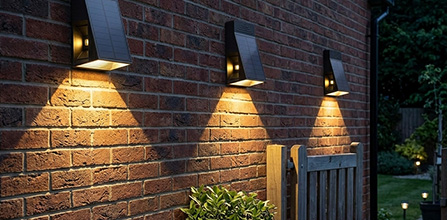
1. Material and Weather Resistance in Solar Garden Lights Wholesale
A large share of low‑cost garden lights use thin recycled plastic[cite: 1]. They may look fine when fresh out of factory, yet intense sunlight will make the shell brittle and faded after just 6‑8 months outdoors[cite: 1].
For mid‑to‑high‑end solar garden lights wholesale lines, most experienced importers prefer ABS mixed with UV inhibitor, die‑cast aluminum or stainless steel structures[cite: 1]. These materials hold up much better in coastal areas with high humidity, or regions with strong sun exposure[cite: 1]. Always double‑check the IP rating as well[cite: 1]. For outdoor garden application, IP65 should be your baseline requirement[cite: 1]. Items rated below IP44 can only work for covered patios instead of open lawn space[cite: 1].
2. Battery Choice Defines Real‑World Runtime
Many suppliers mark bright‑looking parameters on catalog sheets[cite: 1]. Actual working hours, however, heavily depend on battery cell quality[cite: 1].
Nickel‑metal hydride cells fit for cheap promotional give‑aways, yet their cycle life is limited[cite: 1]. For regular retail and distributor stock, lithium‑ion cells or LiFePO4 deliver far more stable performance[cite: 1]. As a factory with large monthly LED output, Tatalux runs full aging testing for every batch before shipment[cite: 1]. We do not simply rely on component suppliers’ data sheets[cite: 1].
3. Certifications for Global Solar Garden Lights Wholesale Markets
Different regions set their own entry rules for solar lighting goods[cite: 1]. For European clients, CE‑EMC, LVD and RoHS are basic requirements[cite: 1]. Goods shipped to Middle East markets need SASO approval[cite: 1]. When you source from Chinese manufacturers, ask for complete test reports rather than just simple certificate screenshots[cite: 1].
At Tatalux, we handle OEM projects for clients spread over multiple continents[cite: 1]. Our engineering team adjusts power supply and component configuration to satisfy local market standards, so our customers do not get stuck at customs clearance[cite: 1].
4. Think About OEM & Trial Order Possibilities
Not every buyer wants huge MOQ for their first tryout[cite: 1]. We understand that new distributors would like to test market feedback before committing to full container volume[cite: 1].
We offer free artwork service for customers who need custom printed boxes and logo marking[cite: 1]. If your quantity sits below standard MOQ, we can ship with our existing Tatalux brand packaging to avoid extra mold‑printing fees[cite: 1]. You can view our solar lawn and wall light product lineup on our solar lighting products page[cite: 1].
Wrap‑up on Sourcing Solar Garden Lights Wholesale
Do not judge solar garden lights purely by unit price[cite: 1]. Long‑term success comes from balanced quality, stable battery performance and valid regional certification[cite: 1]. Should you want samples or further technical discussion, reach our sales team via our contact page[cite: 1].